Our Complete Lineup
Shop All Wheel Simulators
Stainless steel and chrome wheel simulators for every dually, fleet truck, RV, and trailer — with exact fitment for Ford, Dodge, Chevy, and GMC.
✓ In Stock
Stainless Steel
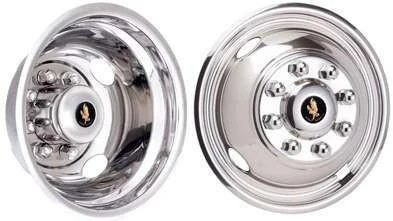
Universal
16" Stainless Steel Dual Wheel Simulators SET OF 4 (Snap On) JSD1608
16 Inch
Snap On
Set of 4
T304L Steel
$349.95
View & Order →
✓ In Stock
Stainless Steel
Universal
17" Stainless Steel Dual Wheel Simulators SET OF 4 (Snap On)
17 Inch
Snap On
Set of 4
T304L Steel
$249.95
View & Order →
✓ In Stock
Stainless Steel
SALE
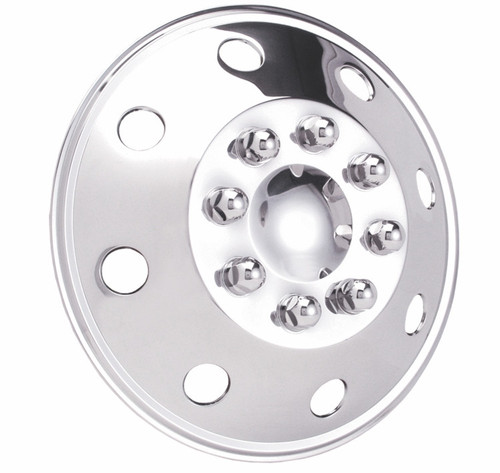
Universal / RV
Stainless Steel 16" RV Style Wheel Cover — Fits Dual or Single Wheels (Set of 4)
16 Inch
RV / Trailer
Set of 4
Dual & Single
$174.95
$299.95
Save $125
View & Order →
✓ In Stock
Stainless Steel
SALE

Ford
Ford 16" Stainless Steel Dual Wheel Simulator — PAIR OF REARS (Pound On)
16 Inch
Pound On
2-Piece Set
Rear Wheels
$259.95
$399.95
Save $140
View & Order →
✓ In Stock
Stainless Steel
Ford
Ford 16" Stainless Steel Dual Wheel Simulators SET OF 4 (Snap On) — E-350 / E-450 / F-350 / F-53
16 Inch
Snap On
Set of 4
8-Lug
$349.95
View & Order →
Stainless Steel
SALE

Ford
1999–2002 Ford F-450 / F-550 Wheel Simulators 19.5" — BOLT ON SET OF 4
19.5 Inch
Bolt On
Set of 4
F450 / F550
$309.95
$399.95
Save $90
View & Order →
Stainless Steel
SALE
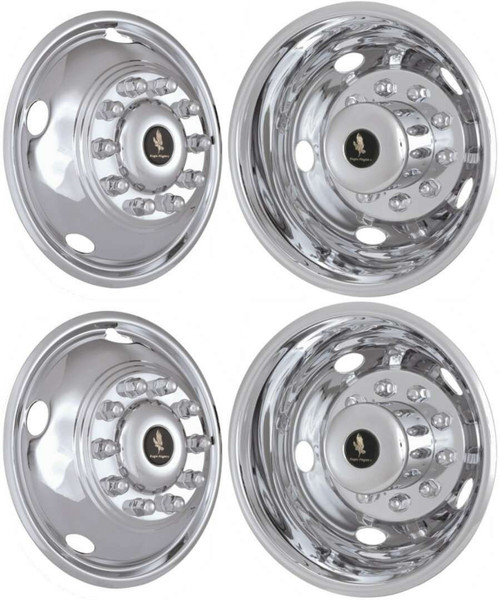
Ford
2017–2024 Ford F-450 / F-550 — 19.5" Stainless Steel Wheel Simulators SET OF 4
19.5 Inch
Stainless Steel
Set of 4
F450 / F550
$329.95
$499.95
Save $170
View & Order →
✓ In Stock
Stainless Steel
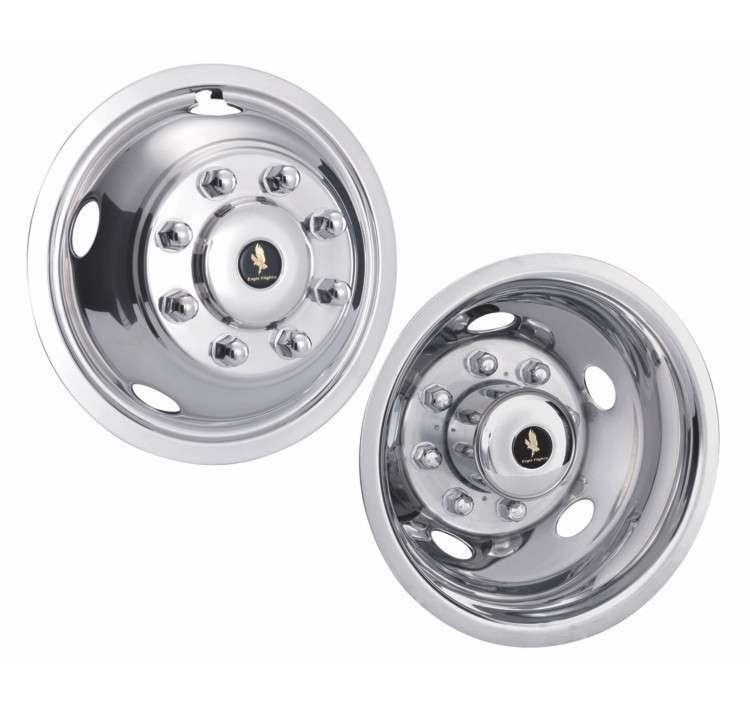
Dodge / Ram
2003–2011 Dodge Ram 3500 Stainless Steel Wheel Simulators / Liners 17"
17 Inch
Ram 3500
2003–2011
Stainless Steel
$279.95
View & Order →
✓ In Stock
Stainless Steel
SALE

Dodge / Ram
2003–2018 Dodge Ram 3500 17" Dually Wheel Simulators — Dual Skins SET OF 4
17 Inch
Ram 3500 Dually
2003–2018
Set of 4
$249.95
$399.95
Save $150
View & Order →
✓ In Stock
SALE

Dodge / Ram
2019–2022 Dodge Style Ram 3500 — Rear Wheel Simulator / Liner 17" (Single)
17 Inch
Ram 3500
2019–2022
Rear
$124.95
$199.95
Save $75
View & Order →
✓ In Stock
SALE
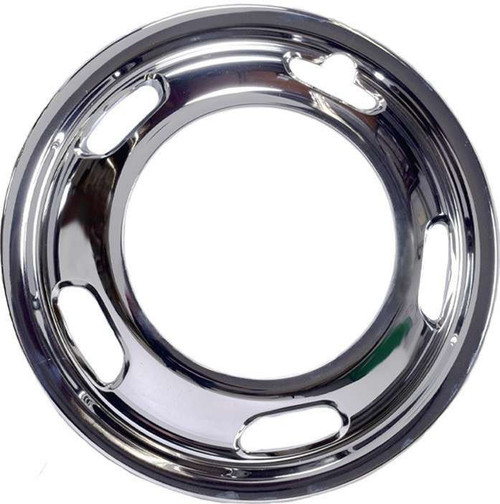
Dodge / Ram
2019–2025 Dodge Style Ram 3500 — Front Wheel Simulator / Liner 17" (Single)
17 Inch
Ram 3500
2019–2025
Front
$119.95
$199.95
Save $80
View & Order →
Chrome
SALE

Dodge / Ram
2019–2022 Dodge Ram 3500 17" Dually Chrome Wheel Simulators — SET OF 4
17 Inch
Chrome
Ram 3500 Dually
Set of 4
$399.95
$499.95
Save $100
View & Order →
Pre-Order
Stainless Steel
SALE

Dodge / Ram
2019–2024 Dodge Ram 3500 Stainless Steel Wheel Simulators 17" — SET OF 4
17 Inch
Stainless Steel
Ram 3500
Set of 4
$329.95
$399.95
Save $70
View & Order →
✓ In Stock
Stainless Steel
SALE

Chevrolet
Chevy Chevrolet 16" Stainless Steel Dual Wheel Simulator — Single REAR (Snap On)
16 Inch
Snap On
Single Rear
Chevy
$124.95
$299.95
Save $175
View & Order →
✓ In Stock
GM Licensed
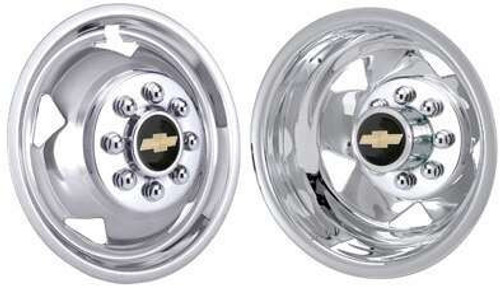
Chevrolet — GM Licensed
2011–2025 GM Licensed Chevrolet Polished Stainless Steel Wheel Simulators 17" — SET OF 4
17 Inch
Polished SS
GM Licensed
Set of 4
$474.95
View & Order →
✓ In Stock
GM Licensed
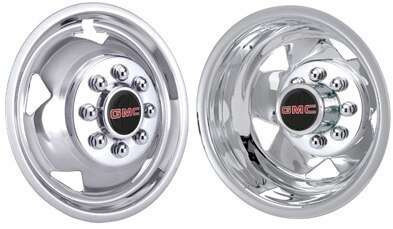
GMC — GM Licensed
2011–2025 GM Licensed GMC Polished Stainless Steel Wheel Simulators / Liners 17"
17 Inch
Polished SS
GM Licensed
Set of 4
$474.95
View & Order →
GM Licensed
Polished SS
Chevrolet / GMC — GM Licensed
GM Licensed Chevrolet GMC Polished Stainless Steel Wheel Simulators 19.5" — Kodiak C4500/C5500/C6500 (1990–2010)
19.5 Inch
Kodiak
Polished SS
GM Licensed
Call for Price
View & Order →